
De Uitdaging
Trust the Process Management is geen generieke sportorganisatie met generieke softwarebehoeften. Het is het managementbureau rond Xavi Simons, wat betekent dat het product moet draaien rond één speler, één schema en één vertrouwd ondersteuningsteam.
Dat creëert een ander soort operationeel probleem. Het team moet meetings, wedstrijdverplichtingen, interne updates, nieuwsbrieven, NDA's en administratief werk coördineren zonder gevoelige informatie te verspreiden over chats, spreadsheets, agenda-uitnodigingen en gedeelde documenten. Een normaal SaaS-dashboard zou de plank misslaan: het product moest aanvoelen als de operationele laag van de speler, niet als nog een generieke back-office tool.
De opdracht was om dat werk samen te brengen in één privéplatform — een platform dat snel genoeg was voor dagelijks gebruik, specifiek genoeg voor profvoetbal, en streng genoeg over wie elk stukje informatie kan zien of wijzigen.
Wat We Hebben Gebouwd
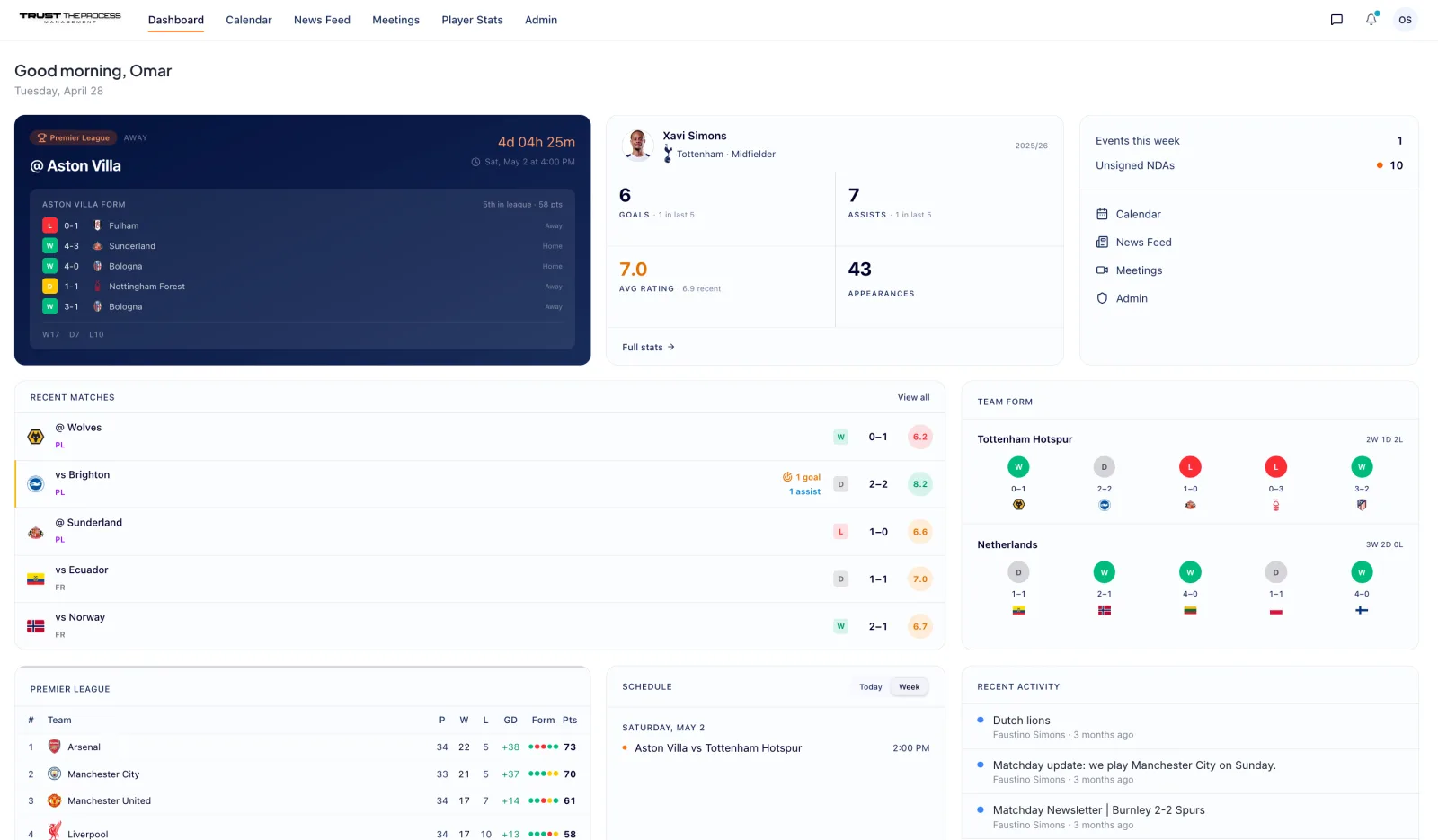
We hebben een spelerspecifieke managementhub gebouwd voor Trust the Process Management. Het platform combineert voetbaloperaties, teamcommunicatie, meeting-intelligentie en compliance-workflows in één rolbewuste applicatie:
- Een speler-first dashboard met next-match-context, spelersamenvattingen, recente wedstrijden, teamvorm, league-table-informatie en quick actions voor zaken die aandacht nodig hebben
- Een kalender voor meetings en wedstrijden met dag-, week- en maandweergaven, zichtbaarheid van aanwezigen, RSVP-status, fysieke of digitale locaties, en wedstrijdmetadata zoals tegenstander, competitie, stadion en thuis/uit-status
- Geautomatiseerde voetbal-data-sync via API-Football, die fixtures, wedstrijdstatistieken, seizoenstatistieken en ranglijsten ververst op een scheduled Vercel cron
- Zoom-geïntegreerde meeting-creatie voor digitale events, zodat meeting-links worden gegenereerd vanuit dezelfde workflow die de kalender beheert
- AI meeting-intelligentie die transcripten omzet in executive summaries, key points en expliciete actiepunten voor een spelermanagement-context in profvoetbal
- Een privé team-nieuwsfeed met updates, aankondigingen, foto's, mijlpalen, pinning en lichte reacties voor interne engagement
- Een nieuwsbrief-workflow met TipTap rich-text editing en campagnebeheer dat aansluit op de interne communicatielaag
- Een digitale NDA- en compliancelaag met bewerkbare templates, handtekening-tracking, PDF-generatie en pending-signature-rapportage
- Rolbewuste administratie voor gebruikersonboarding, profieldata, afdelingen, roltoewijzing en permission-sensitive zichtbaarheid
Hoe We Het Hebben Gebouwd
Drie beslissingen vormden het product:
Het datamodel volgt de spelercontext. Wedstrijden zijn geen kalenderblokken; ze dragen tegenstander, competitie, stadion, thuis/uit en fixture-sync-data. Het dashboard is geen stapel vanity metrics; het is gebouwd rond aankomende verplichtingen, voetbalcontext en operationele acties. Dat is wat het product specifiek doet aanvoelen voor de wereld van één speler in plaats van als een geherstijld admin panel.
Rollen worden afgedwongen onder de UI. Admin-, Manager- en Staff-toegang wordt ondersteund door Supabase Auth, Postgres-policies en permission helper functions. De app kan navigatie en schermen per rol aanpassen, maar de belangrijke beperking leeft in de datalaag: gebruikers ontvangen alleen de records die hun rol en relatie toestaan.
Automatisering verzorgt het repetitieve coördinatiewerk. API-Football houdt wedstrijdcontext fris, Zoom verwijdert meeting-link-administratie, en de OpenAI summarization-laag converteert transcripten naar gestructureerde samenvattingen en actiepunten. Het platform vraagt het team niet om nóg een database handmatig te onderhouden; het trekt het operationele werk in dezelfde plek die ze al gebruiken om te coördineren.
De stack blijft modern maar pragmatisch. Next.js 16 en React 19 bieden de app-router-fundering, Supabase regelt auth, Postgres, storage en RLS, Server Actions houden mutaties dicht bij de routes, Zustand regelt lichte client-state, TipTap drijft rich text aan, en pdf-lib ondersteunt de NDA-workflow. De architectuur is bewust rechttoe rechtaan: de complexiteit hoort thuis in de workflows en het toegangsmodel, niet in onnodige infrastructuur.
Het Resultaat
Trust the Process Management heeft nu één interne operationele laag voor spelermanagement-werk: voetbalverplichtingen, meetings, team-updates, nieuwsbrieven, compliance en administratie leven allemaal in één product in plaats van verspreid over losse tools.
De grootste verandering is dat het platform de manier weerspiegelt waarop het team daadwerkelijk werkt. Wedstrijdcontext staat naast de kalender. Meeting-samenvattingen worden gestructureerde follow-up. Compliance is zichtbaar in plaats van handmatig nagejaagd. Admins, managers en staff krijgen elk het toegangsniveau dat ze nodig hebben zonder de UI te veranderen in een one-size-fits-all controlepaneel.
Aan de technische kant is de codebase zo opgezet dat nieuwe eventtypen, integraties, rollen en dashboard-widgets kunnen worden toegevoegd zonder de fundering te herschrijven. Het datamodel met 28 tabellen geeft het product ruimte om te groeien, terwijl het rolmodel gevoelige voetbalmanagement-informatie correct gescoped houdt.
Waarom Het Belangrijk Is
Elite voetbalmanagement is een omgeving met hoog vertrouwen en hoge context. De software moet tegelijkertijd wedstrijden, meetings, media, juridisch papierwerk, ondersteuningsteam-communicatie en privacy begrijpen. Als een van die stukken geïsoleerd leeft, eindigt het team met coördinatiewerk rond de tools heen in plaats van erdoorheen.
Dit project laat zien waar maatwerksoftware voor is: niet alleen het digitaliseren van een bestaande workflow, maar het product vormgeven rond de mensen, context en beslissingen die er werkelijk toe doen.